Bee and the Horse
The Academic Art of Riding Blog by Bettina Biolik
Your Horse Is Not Avoiding the Exercise. It Is Not Ready Yet.
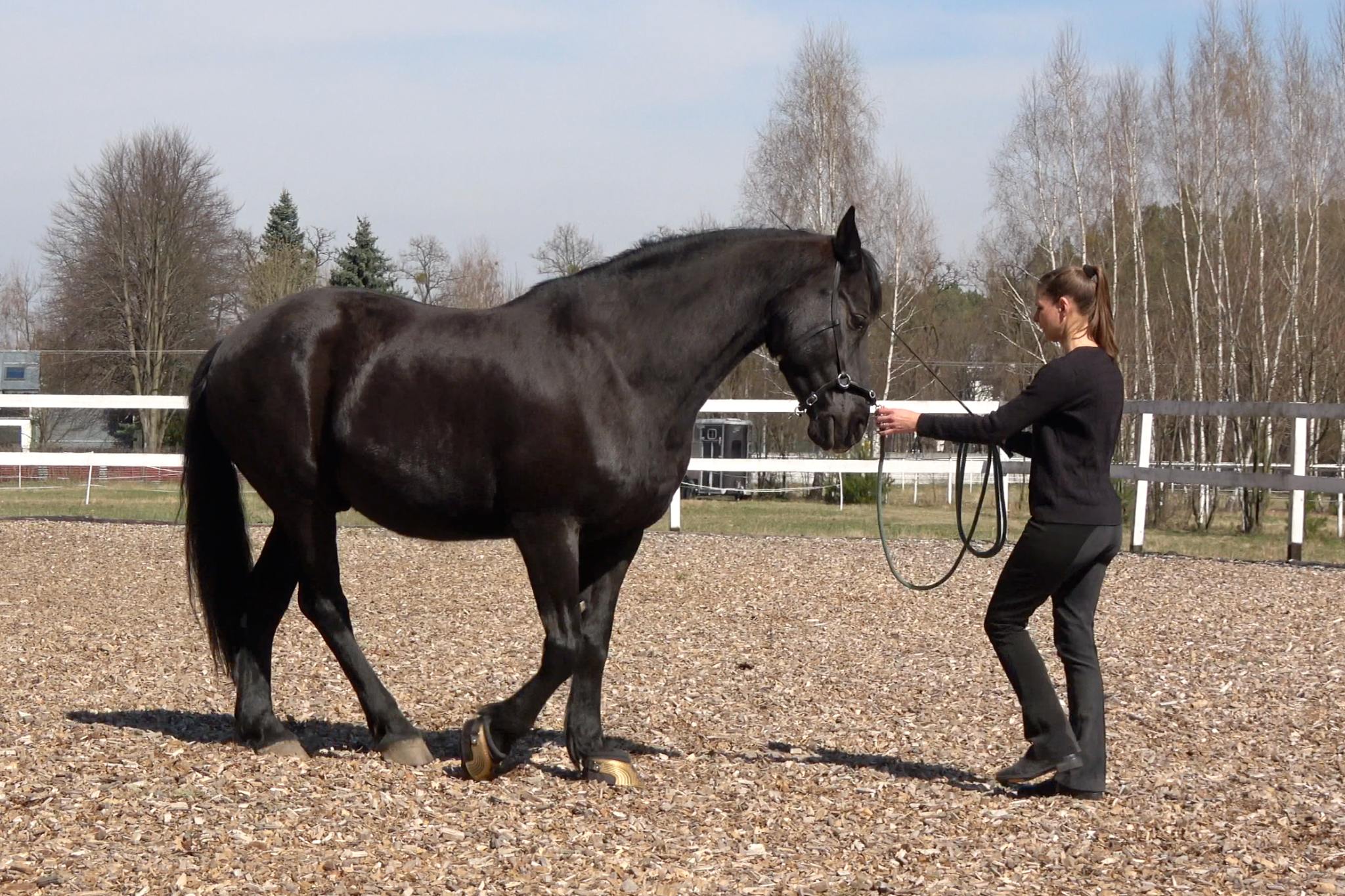
When my students begin more advanced exercises, such as half-pass, pirouette or renvers, it is usually a “non-event”. Their horses don’t struggle, and they often already show quite a good shape and balance the first time they try.
Why?
Because they are well prepared.
.
On my first day of secondary school, our teacher told us about the final exams and how well all the students had done. He talked about some of the subjects and requirements, probably to inspire us. It was a good school, and he was proud of it.
I came home that day totally distraught and told my mum that I couldn’t go to this school. It was much too difficult, and I would fail. How could I possibly pass those exams? My mum smiled and assured me that, by the time I reached that age, my teachers would have prepared me well. We would start at a level I could follow, and each year, we would learn new things, step by step.
.
What you might call a “classical” education is like a ladder of skills. While it is not necessarily a completely fixed sequence, certain steps need to be taught before something else can be achieved. When we skip these steps, the horse struggles.
Today, I saw a video of a horse attempting an exercise it wasn’t ready for. The person who posted it thought it was funny that the horse was struggling and trying to “avoid” doing the exercise correctly. What I saw was a horse that was overwhelmed and simply didn’t know how to do it.
Of course, we can throw our horses in at the deep end. We can rinse and repeat and let them struggle until they eventually figure it out.
But that is not how I prefer to work. The way I see it, I have a responsibility not to make things unnecessarily hard for the horse. Quite the opposite.
What if the horse learns, over time, that whatever I ask can be done? Maybe not perfectly the first time, but that it is possible – and that it can even feel good?
I think it builds a massive amount of confidence when the horse’s daily training experience is not one of struggling and trying to figure things out, but of knowing how to respond, being taught in small steps and experiencing how everything gradually comes together.
Please don’t just throw exercises at your horse. Ask yourself why your horse finds them difficult.
It is not funny when a horse struggles. And just because the horse is cooperating – or “has so much try” – doesn’t mean it is happy doing it.
Advanced exercises are not particularly hard when the horse, and you for that matter, are well prepared. We also need to learn many things along the way, usually even more than the horse.
Recently, it has become trendy to do exercises that are far too advanced with horses that have not been prepared for them. It is basically like asking a student in their first or second year to answer final-year exam questions.
Some horses may be able to muddle through, but they are not evidence that this approach works. They are evidence of their own intelligence and resourcefulness. They have managed despite what the human threw at them.
When your horse has an inverted posture, lacks bend, tilts at the poll, loses forwardness or cannot maintain a rhythm, it is not being lazy. Nor is it trying to avoid a challenge. It is simply out of balance and overwhelmed.
Most horses are kind enough to try anyway, but that is a very sad pedagogical concept. Sorry for being clear about that.
Good dressage training does not overwhelm the horse. It builds the horse up, step by step, with steps large enough to offer a little challenge and keep things interesting, but small enough to avoid overwhelm and create confidence.
If you cannot imagine how this might work, you are very welcome to join my Classroom, where you will find hundreds of tips and training videos. Just follow this link: https://www.bettinabiolik.com/classroom.

 Bee and the Horse