Bee and the Horse
The Academic Art of Riding Blog by Bettina Biolik
Are classical trainers knowingly keeping information and techniques from you?
The short answer is no.
There is no secret method, no hidden technique that classical trainers only show to a few selected students. I think this is important to say, because lately I see the word ‘gatekeeping’ used a lot.
Of course gatekeeping exists in the horse world. It exists when people use tradition, titles, schools, or complicated language to make others feel small. It exists when honest questions are shut down instead of answered, when people are made to feel that they do not belong. And of course, that’s not helpful. But I also think we have to be careful not to confuse gatekeeping with having standards.
A good classical teacher will insist on a certain progression. This progression might differ a little from teacher to teacher, but the idea is usually the same: one thing prepares the next thing. Not because someone is keeping something from us. But because this is how training works.
If you look at the great riders and teachers, they practiced the basics for endless hours. Even the most talented ones. Mastery takes time, whether you learn the violin or how to ride a horse.
And I must admit I have to flinch with a lot of posts lately. Tension is not collection. Just because there are diagonal steps, it is not piaffe.
A horse that becomes tight, nervous, compressed, or loses the back is not necessarily becoming more advanced, even if we might have the feeling we do more advanced moves. Sometimes it is simply too much, too soon.
If your teacher does not introduce you to the more advanced work yet, it is very possible that you and your horse are not ready. This is not exclusion or someone keeping the real work from you. Most likely, it’s simply good horsemanship.
Advanced work should improve the horse. It should make the horse stronger, more balanced, more supple, more able to carry. It should not destroy the rhythm, the back, the trust, or the joy in the work. Yes, some humans and horses will plateau, even in a correct and thorough education. That’s normal. And sometimes we cannot go further than that. Either because of our own limitations or the horse’s. Usually, there is a good reason for it. And that’s okay. Not every horse has to do piaffe, not every rider has to school the highest exercises. Not every training journey has to lead to the same place.
But every horse deserves to be protected from being pushed into work the body and mind are not prepared for.
When someone says: this is not collection, the horse is tense, the back is dropped, the rhythm is lost, the horse is not ready, that is not automatically gatekeeping. Sometimes it is simply wanting to protect the horse.
For me, classical dressage needs standards. The answer is not to lower the standard and call everything collection. Rather, it is to teach the standard more clearly. A good teacher should be able to explain why the basics matter and what they are. Why an exercise shouldn’t be done yet. What the signs are that the horse is prepared or that the horse is struggling. That is very different from saying: you do not belong here.
I will teach you everything I know, as soon as it makes sense for you to know it and your horse is prepared enough.
And everything I know, I learned from my teachers. When it was time for me to learn it, they did not hold back. And still, many things had to be explained to me more than once. Some things I still don’t fully understand. Not because the knowledge is hidden. Not because I’m not part of some inner circle. But because my own understanding is still developing, and because some things can only really be understood through experience. And there is more to come, because I am not ready yet. That is also part of learning.
Sometimes we are not kept away from knowledge.
Sometimes we are still growing into the ability to understand it.
Please do not mistake the online space for what is going on in a good classical school.
None of my teachers speaks in a disrespectful way about other teachers. If I ask about their opinions, they will tell me, but always in a respectful way. Even if they do not agree. They will admit that there might be a time and place for a method they usually do not use.
There is cooperation between different classical schools. There is exchange and there are conversations. They often happen in person, not online, but that does not mean they don’t happen.
So no, I do not believe there is a secret classical method hidden behind closed doors. There are basics that need to be practiced again and again.
There is the humility of not being ready yet. And there is the responsibility to protect the horse while we learn.
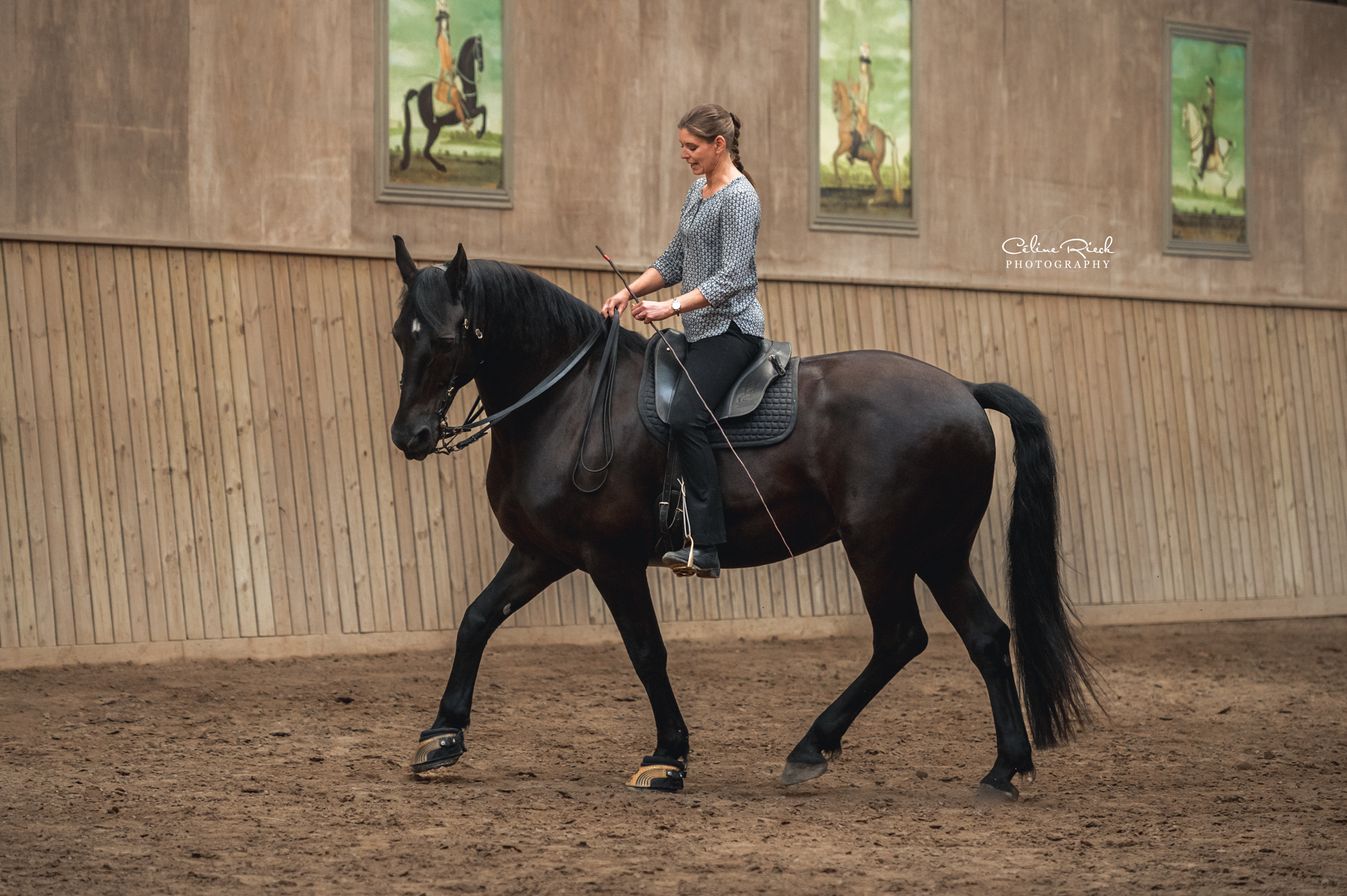
Photo: Weto and I learning during an internship with Bent Branderup, 2022, by Céline Rieck Photography.

 Bee and the Horse