Bee and the Horse
The Academic Art of Riding Blog by Bettina Biolik
What to with a Horse That’s Very Distracted?
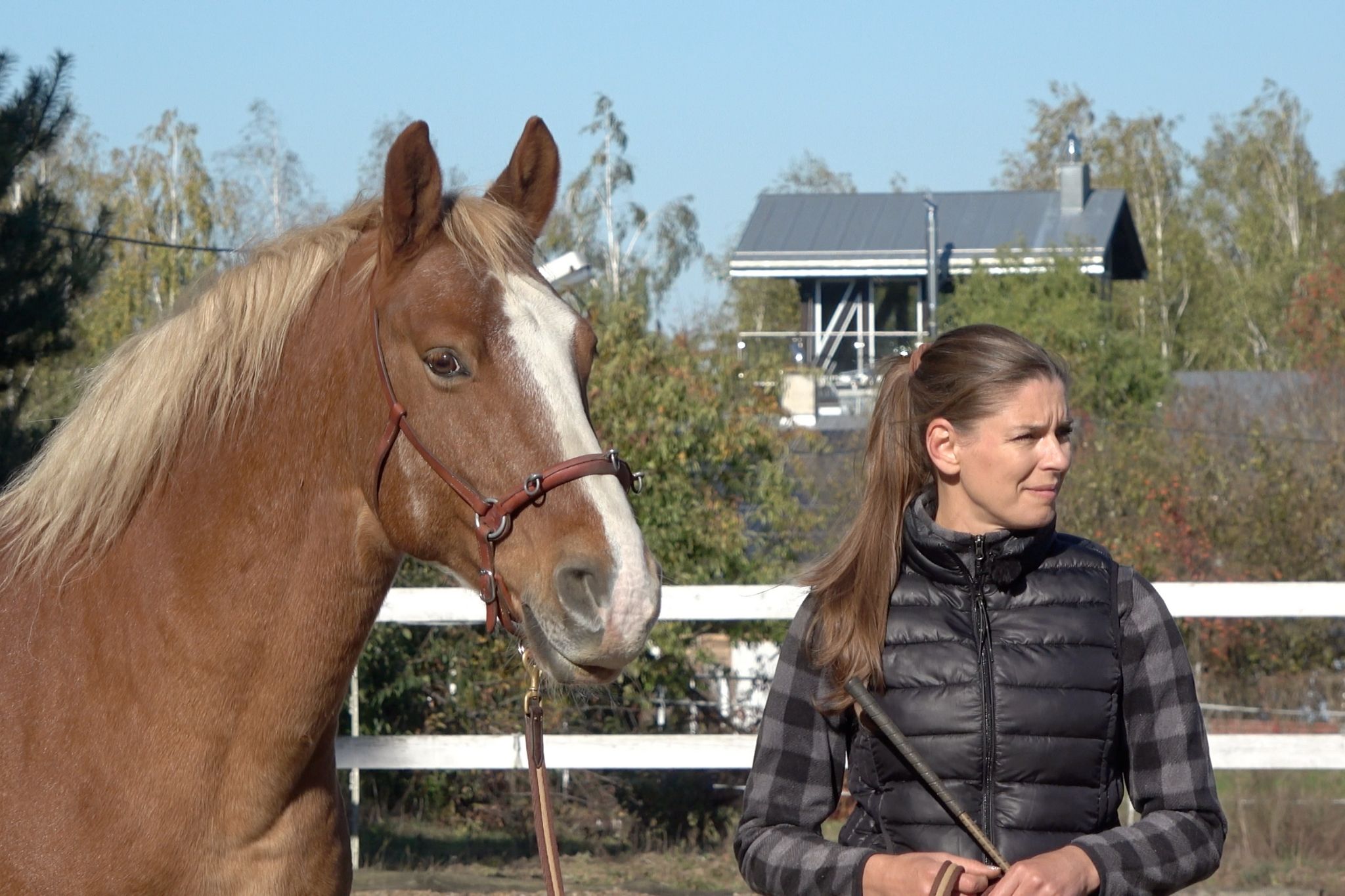
When I bought my horse Nazir, he turned from “bomb proof” to very spooky in a matter of weeks. As soon as he had gained some weight and didn’t have this enormous work load anymore, he was the complete opposite of the quiet horse I wanted.
I started to ask for advice how to change that, started reading horsemanship books. At the time, the general opinion was, that he doesn’t trust me as a leader and that I should do some horsemanship exercises to remedy that (mostly disengaging hindquarters, moving his feet etc.).
Years of trying different things followed. Years of frustration, sometimes a short success, but always a disappointment after.
I eventually learned that he had a totally damaged right knee due to bone chips. Two operations followed. He wasn’t really lame before the operations, just had a bit of a tight back (which is how we found it). Beside the spookiness, I noticed a slightly shorter stride with the right hind, but it was explained to me as asymmetry.
Then Weto came into my life. He could be very distracted in the training. Especially when it was windy, he often scanned the environment. He wasn’t very spooky but rather got very stuck and couldn’t focus. It wasn’t so bad that it was bothering me a lot, and for the most part, I just ignored it. It got a bit better over time as he progressed in the academic art.
Then he started to become a lot more spooky all of a sudden. I tried different exercises, supplements. During a routine dental visit, we found a broken molar that had to be operated. Afterwards, he went back to his normal behaviour.
Still, sometimes, he was a bit hyper vigilant. In the meantime, I had done courses about liberty training and had read books about horse language. More and more, I found that I needed to dial down my aids, be softer. More subtle, more consistent, more predictable. My horses told me I was a bit too much. They appreciated less.
When I bought Minor, I started to trust my inner feeling really for the first time. He was totally green and had very bad focus in the very beginning. He could focus on one task for about 30 seconds, then he started to be distracted.
I just let him. I looked with him. As long as he wanted. I never tried to get him back to work.
His attention span got quickly better. And very soon, he had an incredible focus. He could do the work while a storm was howling or all sorts of stuff was happening near the arena (like new street lamps being installed with big cranes or a new road surface being poured).
I never asked him a question when he wasn’t listening. I always waited until his attention came back to me. When he looked away from me for longer, I always took it as a hind to dial down whatever I was doing, and especially calming my energy.
I applied what I had learned here to the other horses as well. I don’t know when it happened, but at some point, I didn’t try to do anything anymore to get my horses’ attention. I changed what I thought about it when they were “distracted”, and I just politely ask them if we can continue. If not, we didn’t.
I stopped thinking “oh man, you’ve seen this thing a thousand times, don’t be ridiculous”. First I changed it to “what do you see?” And often looked with them. Then, at some point, I just stopped caring what they see, too. I operated more off an inner feeling of either separation or togetherness. Mostly, I would just wait. Not doing anything, not thinking “why are you staring over there again?”. Sometimes I would just change my position a bit, or touch them in a certain place.
I tried to become even softer in my asks. Have even better releases. Praise earlier. Have very long breaks, lots of them. Give a clear, short task. Seeing smallest changes in balance. Being even more careful to always work them into a balance, not out of balance (and were balance for each horse is, can be very different). I learned about Nazir that he is extremely sensitive. A lot more than the other two. He knows my mood from 500m away. I just think something, and he does it. Normal aids are often much too loud for him. Weto is a very responsible horse. He is the herd leader and wants to keep everyone safe. He really cares. He doesn’t like to be rushed, neither in the training nor when he’s checking something out.
I have stopped thinking about training as training. I now perceive it as time to spend together. Sharing space. Sometimes we do something. Sometimes we don’t. On some days, the horses have other plans than training. On some days, I don’t feel quite myself. On some days, we do routine sessions. On some days, it feels like we fly together.
So, what to do when the horse gets very distracted?
I think there is no easy answer. Because it might have many different reasons. For me and my horses, it was becoming more patient, accepting physical limitations, investigating pain, getting rid of the judgement, learning more about horse language and how horses learn, developing better timing, feel, and an eye for balance.
If your horse is very distracted all the time – see it as a wonderful opportunity to learn. And when you don’t want to fix their attention anymore – you’re probably getting closer.

 Bee and the Horse